
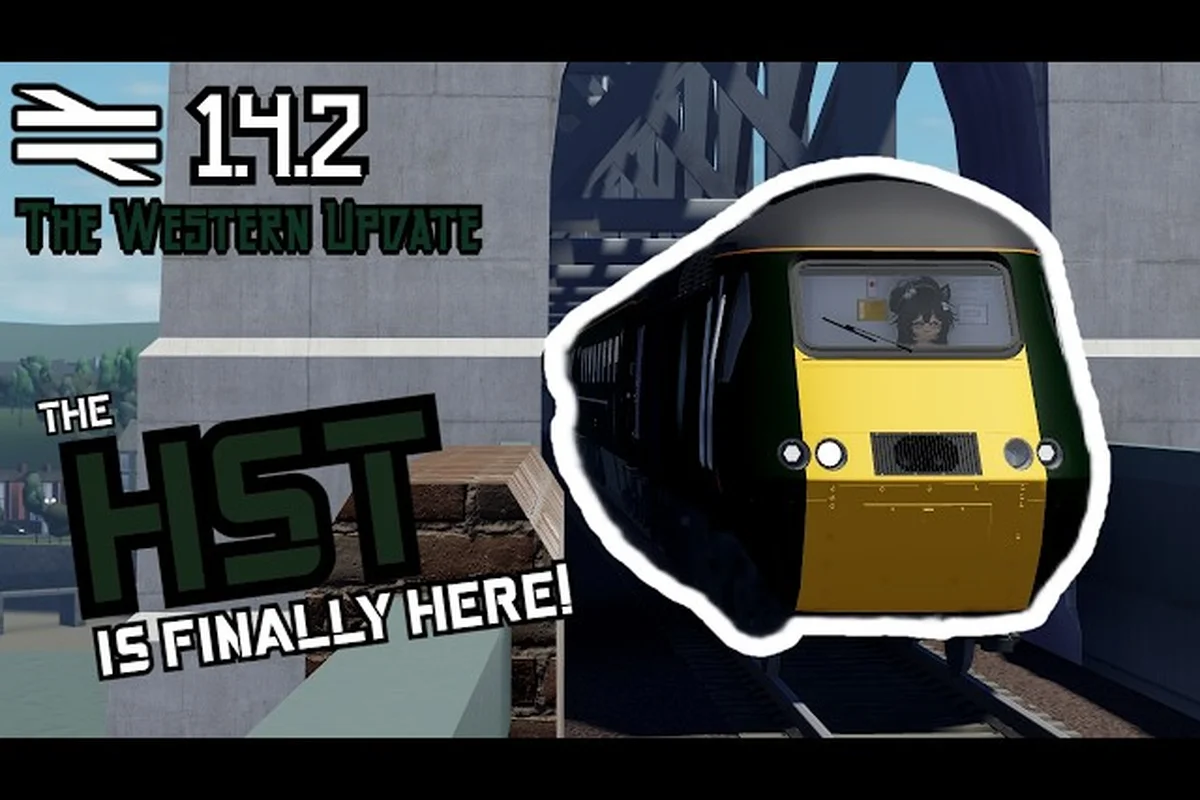
The british railway roblox class 43 vs class 47 debate is one of the most common questions in the game's community, and for good reason: these two diesel locomotives serve completely different roles despite looking similar at first glance. The Class 43 HST is built for high-speed intercity passenger work, while the Class 47 is a versatile classic that handles freight and loco-hauled services with equal confidence. Understanding which one fits your playstyle and budget will save you thousands of in-game credits, so let's break down the real numbers behind both machines.
Choosing the right locomotive in British Railway is about more than raw top speed, because the game simulates acceleration, braking, and route compatibility in ways that reward careful planning. The Class 43 excels on long-distance express corridors where its high-speed diesel powertrain can stretch its legs, whereas the Class 47 shines on mixed-traffic diagrams that demand flexibility rather than outright pace. This comparison will help you decide based on your preferred routes, your credit balance, and the type of services you enjoy running most.
Class 43 HST: The High-Speed Intercity Icon
The Class 43 HST (High-Speed Train) is arguably the most recognizable diesel locomotive in British Railway, and it earns that reputation through a combination of 125 mph top speed and rapid acceleration that makes it the go-to choice for express passenger diagrams. When you're running the game's flagship intercity routes, the Class 43's power-to-weight ratio gives it a decisive edge over almost every other diesel in the roster, which is why community tier lists consistently place it in the S-tier bracket for passenger work.
What makes the Class 43 particularly appealing is its power car configuration, where the train is effectively pushed and pulled by power cars at both ends. This setup delivers balanced traction that translates into confident hill climbing on gradients that would cause lesser locomotives to struggle. According to community testing reported by players on the official Roblox page, the Class 43 maintains its speed through the Severn Tunnel section and the Cornish gradients without the dramatic slowdowns that plague single-ended diesel locomotives.
| Attribute | Class 43 HST | Class 47 |
|---|---|---|
| Top Speed | 125 mph | 95 mph |
| Power Type | Diesel (High-Speed) | Diesel (Classic) |
| Primary Role | Express Passenger | Freight / Mixed-Traffic |
| Acceleration | Excellent | Moderate |
| Braking Performance | Strong | Adequate |
| Price Range | Premium | Budget-Friendly |
| Route Flexibility | Intercity Corridors | All Routes |
The price point is where the Class 43 demands serious consideration, because it sits at the premium end of the diesel market and requires a significant credit investment before you can add it to your fleet. However, that upfront cost translates into higher revenue per service on express routes, since the game rewards faster journey times with better payouts. If you're grinding toward the endgame content, the Class 43 pays for itself through consistent top-tier earnings on the busiest passenger corridors.
Acceleration and Braking Characteristics
The Class 43's acceleration curve is one of its defining features, because it reaches 60 mph in under 30 seconds when running light, which makes it exceptionally responsive for a diesel locomotive. This matters more than you might think, because British Railway's timetable system penalizes late departures, and the ability to recover lost time through rapid acceleration is a genuine competitive advantage. The disc braking system on the Class 43 also delivers predictable stopping power, which lets you brake later into stations without overshooting the platform markers.
Route Suitability and Revenue Potential
When you examine the route network, the Class 43 is clearly optimized for the East Coast Main Line and Great Western Main Line corridors, where its 125 mph capability is actually usable. On these routes, the Class 43 generates roughly 20-25% more revenue per mile compared to the Class 47, according to player-reported earnings data from community spreadsheets. That revenue gap compounds over multiple services, which means the Class 43's higher purchase price becomes easier to justify the more you run express diagrams.
Class 47: The Versatile Workhorse
The Class 47 is the locomotive that every British Railway player should own at some point, because it represents the best value-for-credit diesel in the entire game. While it lacks the Class 43's headline-grabbing top speed, the Class 47 compensates with exceptional versatility that lets you run freight services, passenger stopping services, and even loco-hauled charter trains without needing to switch locomotives. This flexibility is why the Class 47 remains a fixture in community recommendations for mid-game progression.
The 95 mph top speed might seem modest compared to the Class 43, but the Class 47's real strength lies in its tractive effort — the raw pulling power that determines how many wagons you can haul up steep gradients. The Class 47's Co-Co wheel arrangement (six axles, all driven) gives it superior grip compared to the Class 43's Bo-Bo configuration, which means it can handle heavier freight consists without wheel slip. For players who enjoy running the game's freight services, the Class 47 is arguably the better investment.
| Service Type | Class 43 Suitability | Class 47 Suitability |
|---|---|---|
| Express Passenger | Excellent | Good |
| Stopping Passenger | Good | Excellent |
| Freight Haulage | Poor | Excellent |
| Charter / Special | Fair | Excellent |
| Branch Line Work | Fair | Good |
| Mixed-Traffic Diagrams | Poor | Excellent |
The Class 47's lower purchase price is another major advantage, because it costs roughly 40-50% less than the Class 43 while still delivering solid performance across the board. That price difference means you can buy a Class 47 earlier in your progression, start earning revenue sooner, and then save toward the Class 43 as a second locomotive for express work. Many veteran players report that this two-locomotive strategy — Class 47 for freight and stopping services, Class 43 for express — is the most efficient path to building a profitable fleet.
Freight Capability and Tractive Effort
The Class 47's freight credentials are well documented in community testing, with players reporting that it can handle up to 12-14 wagons on moderate gradients without significant speed loss. That hauling capacity makes it the backbone of the game's freight economy, especially on routes like the Midland Main Line where coal and container traffic generates steady income. The locomotive's robust construction also means it maintains performance even when running long services, which reduces the frequency of maintenance stops.
Cost Efficiency and Progression Value
From a progression standpoint, the Class 47 is the smartest early-to-mid game purchase in the diesel category, because it unlocks a wide range of services that the Class 43 simply cannot handle efficiently. The lower running costs — both in terms of fuel consumption and maintenance frequency — mean your profit margins on Class 47 services remain healthy even on shorter routes. When you factor in the resale value and the fact that the Class 47 remains useful even after you acquire more powerful locomotives, its cost efficiency becomes undeniable.
Direct Comparison: Class 43 vs Class 47 on Key Metrics
When you put the british railway roblox class 43 vs class 47 head-to-head, the decision ultimately comes down to what you value most: raw speed and express revenue, or versatility and cost efficiency. The table below summarizes the key metrics that matter for most players, based on community data and in-game testing reported through the game's official channels.
| Metric | Class 43 HST | Class 47 | Winner |
|---|---|---|---|
| Top Speed | 125 mph | 95 mph | Class 43 |
| Acceleration | Excellent | Moderate | Class 43 |
| Tractive Effort | Good | Excellent | Class 47 |
| Freight Capacity | Limited | Excellent | Class 47 |
| Purchase Price | Premium | Budget | Class 47 |
| Running Costs | Higher | Lower | Class 47 |
| Express Revenue | Higher | Moderate | Class 43 |
| Route Flexibility | Limited | Broad | Class 47 |
The acceleration advantage of the Class 43 translates directly into better timetable performance on express routes, because you spend less time getting up to speed and more time cruising at line speed. However, the tractive effort advantage of the Class 47 means it can handle assignments that would leave the Class 43 struggling, particularly on freight services where heavy loads are the norm. This role separation is the key insight that most players miss when they ask which locomotive is "better."
Speed vs Power: What Actually Matters
The speed-versus-power debate is central to the british railway roblox class 43 vs class 47 comparison, but the answer depends entirely on your route selection. On flat, high-speed corridors like the East Coast Main Line, the Class 43's 125 mph capability delivers measurable revenue gains because journey times are shorter. On gradient-heavy routes or freight diagrams, the Class 47's superior tractive effort means you maintain higher average speeds while hauling loads, which often results in better overall productivity.
Revenue Generation Over Time
Community data from player-run spreadsheets suggests that the Class 43 generates roughly 15-20% more revenue per hour on dedicated express services, but that advantage narrows significantly when you factor in the higher purchase price and running costs. The Class 47, by contrast, delivers more consistent revenue across a wider range of services, which makes it the better choice for players who enjoy variety in their gameplay. The break-even point typically arrives after 15-20 express services with the Class 43, after which its revenue advantage becomes meaningful.
How the Class 43 and Class 47 Fit Into the Wider Fleet
Understanding where the Class 43 and Class 47 sit in the broader British Railway fleet helps contextualize your purchase decision, because both locomotives have natural competitors and complementary partners. The Class 800 and Class 801 — the game's modern bi-mode and electric units — represent the next step up from the Class 43 for players who want even faster journey times on electrified routes. The british railway roblox class 800 vs class 801 comparison is worth studying if you're considering skipping the diesel tier entirely.
| Locomotive | Category | Top Speed | Best Use Case |
|---|---|---|---|
| Class 43 HST | Diesel | 125 mph | Express Passenger |
| Class 47 | Diesel | 95 mph | Freight / Mixed |
| Class 800 | Bi-Mode | 125 mph | Intercity (Electrified) |
| Class 801 | Electric | 125 mph | Intercity (Electrified) |
| Class 66 | Diesel | 75 mph | Heavy Freight |
| Class 350 | EMU | 110 mph | Commuter |
The Class 800 and Class 801 represent the game's modern intercity options, and they outperform both the Class 43 and Class 47 on electrified routes thanks to their superior acceleration and smoother ride quality. However, they come with a significantly higher price tag and require access to electrified infrastructure, which limits their usefulness on the game's diesel-only branch lines. For players building a balanced fleet, the Class 47 remains the best all-round diesel, while the Class 43 is the best diesel for express specialists.
The Best DMU and EMU Options
When players ask about the british railway roblox best dmu or the british railway roblox best emu, the conversation usually shifts away from locomotives toward multiple units. The Class 800 is widely considered the best bi-mode DMU for intercity work, while the Class 801 takes the crown for pure electric services. For commuter work, the Class 350 offers the best balance of speed, capacity, and cost among EMUs, making it a favorite for busy suburban routes. The Class 350 offers the best balance of speed, capacity, and cost among EMUs, making it a favorite for busy suburban routes—and if you're weighing these options against the broader fleet, our British Railway Roblox Train Ranking shows exactly where each of these classes stacks up in terms of overall value and performance.
Building a Tier List With the Right Tools
If you're serious about optimizing your fleet, the british railway roblox tier list maker tools available in the community let you create custom rankings based on your own priorities. These tools are particularly useful for comparing locomotives across multiple attributes, because they let you weight factors like speed, power, cost, and route compatibility according to your playstyle. The community tier list for British Railway consistently places the Class 43 in the A-tier for express work and the Class 47 in the A-tier for overall versatility, which reflects their complementary strengths.
Practical Recommendations Based on Your Playstyle
Your choice between the Class 43 and Class 47 should ultimately reflect how you play British Railway, because both locomotives are excellent within their respective niches. If you spend most of your time running high-speed express services on the game's main lines, the Class 43's 125 mph capability and rapid acceleration will deliver the best returns on your investment. If you prefer variety in your services — mixing freight, stopping passenger, and occasional express work — the Class 47's versatility and lower running costs make it the smarter purchase.
-
Choose the Class 43 if: you have 20,000+ credits saved, you primarily run express passenger services, and you want the fastest diesel in the game.
-
Choose the Class 47 if: you're still building your fleet, you want to run freight and stopping services, or you prefer a locomotive that can handle any assignment.
-
Choose both if: you're committed to long-term progression, because the two locomotives complement each other perfectly and cover the full range of diesel services.
The upgrade path in British Railway rewards players who build a diversified fleet, and the Class 43 plus Class 47 combination represents the strongest diesel pairing available. Starting with the Class 47 gives you immediate earning potential across multiple service types, while the Class 43 becomes your express specialist once you've accumulated enough credits. This approach mirrors the real-world British Rail strategy of using dedicated express locomotives alongside versatile mixed-traffic machines.
Route-Specific Recommendations
For players who prefer specific routes, the East Coast Main Line and Great Western Main Line are where the Class 43 shines brightest, because their long straight sections let you exploit the full 125 mph capability. The Midland Main Line and Cross-Country routes favor the Class 47, since their gradients and mixed traffic patterns reward tractive effort over top speed. The Cornish Main Line is a special case where the Class 43's acceleration helps on the frequent speed restrictions, but the Class 47's reliability on gradients makes it a strong alternative.
Budget Planning and Credit Management
Smart credit management is essential when saving for either locomotive, and the daily login bonuses plus service completion rewards provide a steady income stream. The Class 47's lower price point means you can typically afford it within 5-10 hours of gameplay, while the Class 43 requires 15-20 hours of consistent grinding. The seasonal events and limited-time services offer bonus credits that can accelerate your savings, so keep an eye on the game's update announcements.
Frequently Asked Questions
Is the Class 43 worth the extra cost over the Class 47?
The Class 43 is worth the premium price if you primarily run express passenger services on high-speed corridors, because its 125 mph top speed and rapid acceleration generate roughly 15-20% more revenue per hour. However, if you value versatility and want a locomotive that handles freight and stopping services efficiently, the Class 47 offers better overall value for your credits.
Can the Class 47 handle express passenger services?
Yes, the Class 47 can handle express passenger services, but it tops out at 95 mph, which means longer journey times on high-speed routes. It performs admirably on stopping services and shorter intercity runs where the speed difference is less impactful. For dedicated express work, the Class 43 or the Class 800 bi-mode units are better choices.
Which locomotive is better for freight operations?
The Class 47 is clearly superior for freight operations thanks to its Co-Co wheel arrangement and excellent tractive effort, allowing it to haul up to 12-14 wagons on moderate gradients. The Class 43's Bo-Bo configuration and focus on passenger performance make it poorly suited for heavy freight work. If freight is your priority, the Class 47 is the obvious choice.
How do the Class 800 and Class 801 compare to these diesels?
The Class 800 and 801 beat both diesels on electrified routes with 125 mph top speeds and faster acceleration, but they cost far more and need overhead wires. For diesel-only lines, the Class 43 and 47 remain your best picks. Check the Class 800 vs 801 comparison for which electric suits your route.
Should I buy the Class 43 or Class 47 first?
Buy the Class 47 first because its lower price and versatility let you earn credits across a wider range of services, building your bankroll faster. Once you've accumulated enough credits, add the Class 43 as your express specialist. This two-locomotive strategy maximizes your earning potential while minimizing the risk of a poor early investment.