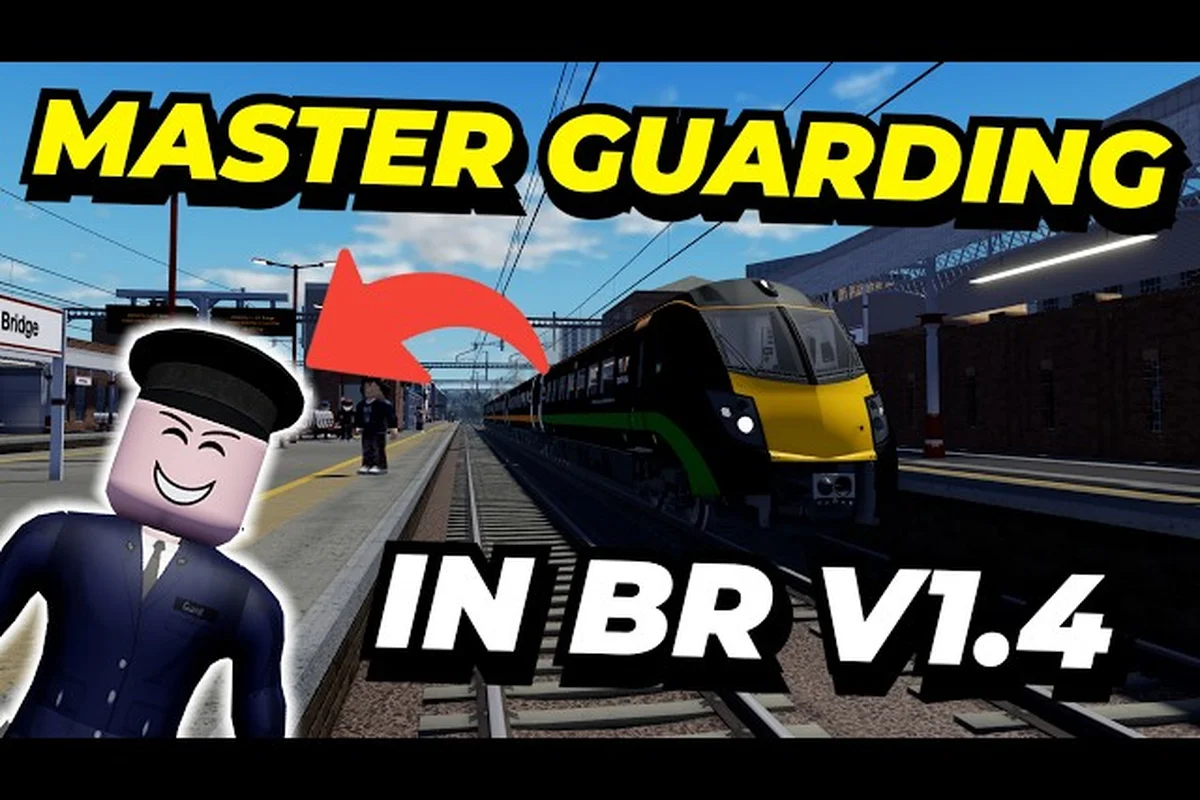
Learning how to guard in British Railway transforms your experience from a passive passenger into an essential part of the service. The guard role, reworked in V1.4, puts ticket checking, door control, and passenger safety at the center of every journey, making it one of the most engaging ways to play. Whether you are running a local stopper or an intercity express, mastering this role means your friend's train departs on time and every passenger feels looked after. This British Railway Roblox roles guide breaks down the complete guard workflow, from boarding to dispatch, with practical tips drawn from community experience and the official Fourth Rail Discord.
The Guard Role and Why It Matters in British Railway
The guard is the conductor figure who rides along on a friend's service, handling the operational duties that keep the railway running safely. According to the official British Railway page on Roblox, the guard role is one of the game's core selling points: guards board a friend's service, check tickets in every coach, control the doors at each station, and dispatch the train on time using the intercom and camera modes. The V1.4 update reworked this system entirely, making ticket checking, door control, and passenger safety the center of the role rather than optional extras.
Why should you care about guarding? Because it is the fastest way to understand how the whole service operates. When you guard, you learn station layouts, platform positions, and door alignment in a way that driving alone never teaches you. That knowledge carries directly into your own driving shifts, since you will know exactly where to stop so the guard can open the right doors. Community reports from the Fourth Rail Discord suggest that players who master guarding first become noticeably better drivers because they understand the full operational picture.
The guard role also fills a practical need. Many drivers prefer to focus on the controls, and having a competent guard means they can trust the service to run on time. If you want to build a reputation as a reliable player, guarding for others is the quickest way to earn that trust. It is a social role as much as a technical one, which is why the community around it is so active.
The Guard Interface and Controls Explained
The V1.4 guard rework introduced a dedicated interface that consolidates your tools into one clean panel. When you board a train as a guard, you gain access to the guard panel, which displays the door controls, the intercom, and your ticket checking status. The interface is designed to be readable at a glance, so you can spend your attention on the platform rather than hunting through menus.
Your primary tools break down into three categories:
-
Door controls — open and close the doors on the side facing the platform. You can operate all doors at once or select individual coaches depending on the service type.
-
Intercom system — lets you announce departures, confirm with the driver, and make passenger announcements. The intercom is also how you signal that the train is safe to depart.
-
Camera modes — switch between a platform view and an interior view so you can watch passengers boarding and check that doors are clear before closing.
The guard panel appears when you join a service as a guard, and it stays visible throughout the journey. You can toggle between the platform camera and the interior camera with a single keybind, which is essential for checking that no one is trapped in the doors. Community masterclass videos on YouTube emphasize that good guards develop a rhythm: check the platform, check the interior, close the doors, then confirm with the driver.
One detail that catches new guards off guard is that the door controls only work when the train is stationary and correctly aligned with the platform. If the driver overshoots the stopping mark, you will not be able to open the doors at all. That is why communication with the driver matters so much, and why the intercom confirmation step is built into the workflow.
A Guard's Step-by-Step Ticket Checking Routine
Ticket checking is the heart of the guard role, and the V1.4 rework made it a structured process rather than a free-form activity. The workflow follows a clear sequence that keeps the service moving while ensuring every passenger has a valid ticket. Here is the standard procedure that community guides recommend:
-
Board the service — Join your friend's train before departure and position yourself in the first coach.
-
Announce your presence — Use the intercom to let passengers know the guard is on board and tickets will be checked.
-
Walk through each coach — Move through the train systematically, checking every passenger. The game highlights passengers who have not yet been checked, so you can spot them quickly.
-
Handle disputes politely — If a passenger claims they have a ticket but it does not show up, ask them to rejoin the service or check their inventory. Most disputes are simple glitches rather than deliberate fare evasion.
-
Report completion — Once every coach is checked, use the intercom to confirm to the driver that the train is clear.
The ticket checking workflow is more than just a formality. It is the main way the guard contributes to the service's success, and some servers track checked passengers as a metric of service quality. The ticket checking guide covers the finer points of this process in detail, including how to handle edge cases like passengers who board at intermediate stations.
Timing is everything here. On a local stopper with short dwell times, you have maybe thirty seconds between arrival and departure to check new passengers and get back to the panel. Experienced guards learn to check the coaches closest to the panel first, then work outward, so they are never far from the door controls when the driver is ready to leave.
Door Control and Passenger Safety Protocols
Timing Door Control at Busy Interchanges Like Avonhill
At busy interchanges such as Avonhill, timing your door control is the difference between an on-time departure and a delay. The community guidance from the Fourth Rail Discord emphasizes that guards should begin the door-closing sequence roughly 10 seconds before the scheduled departure time, accounting for the intercom confirmation with the driver. Unlike local stoppers with short dwell times, intercity expresses at Avonhill have longer boarding windows, so you can afford to wait for late passengers. However, on stoppers, you must close doors immediately after the last passenger boards to maintain the timetable.
Advanced Efficiency: Using Camera Modes to Pre-Empty Platforms
Advanced guards use the camera modes not just for dispatch, but to pre-empt platform congestion. Before arriving at a station, switch to the platform camera to identify bottlenecks, such as groups of passengers clustered near the doors. This allows you to announce over the intercom which coach has the least crowding, directing boarding passengers to spread out. On intercity expresses, this technique can cut dwell time by up to 15 seconds per station, significantly improving the service's on-time performance. This strategy is particularly effective at Avonhill, where platform congestion is a common cause of delays.
Door control is where the guard's responsibility for passenger safety becomes concrete. The V1.4 rework made door operation more realistic, with separate controls for each side of the train and a clear visual indicator of which doors are open. You must only open the doors on the platform side, and you must ensure they are fully closed before the train departs.
The safety protocol follows a strict sequence that experienced guards internalize:
-
Arrival — Watch the platform through the camera mode as the train stops. Confirm the train is correctly aligned before attempting to open doors.
-
Opening — Open the doors on the platform side only. On curved platforms, this can be tricky because the gap between train and platform varies along the length of the train.
-
Monitoring — Watch passengers boarding and alighting. Keep an eye on the interior camera to spot anyone lingering in the doorways.
-
Closing — Give passengers a few seconds after the last boarding rush, then close the doors. If anyone is trapped, the game will usually prevent the doors from closing fully.
-
Dispatch — Confirm with the driver via the intercom that the platform is clear and the doors are secured.
The passenger safety aspect becomes more demanding on busy routes like the Avonhill interchange, where crowds can block doorways and passengers may try to board at the last second. Community guidance from the Fourth Rail Discord recommends being firm but polite: announce that doors are closing, give a clear warning, then close them. A guard who hesitates causes delays that ripple through the entire timetable.
Weather conditions add another layer of complexity. In rain or snow, passengers move more slowly and platforms can be slippery, so you need to allow extra time for boarding and alighting. The camera modes are essential here because they let you see the full platform even when visibility is poor, which is why the beginner guide lists camera control as a core skill to practice early.
Mastering the Intercom and Dispatch Sequence
The intercom is the guard's voice, and using it well separates a good guard from a great one. The V1.4 rework tied the intercom more closely to the dispatch sequence, so your announcements are not just flavor text — they are part of the operational flow. A typical dispatch sequence looks like this:
| Step | Action | Intercom Announcement |
|---|---|---|
| 1 | Board and settle in | "Good morning, this is the guard speaking. Tickets will be checked shortly." |
| 2 | Complete ticket check | "Ticket check complete. Thank you for your cooperation." |
| 3 | Prepare for departure | "Please mind the closing doors." |
| 4 | Confirm with driver | "Doors closed, platform clear. Ready to depart." |
| 5 | Departure | "Next stop is [station]. Thank you for traveling with us." |
The confirmation step is the most important because it is the signal the driver is waiting for. Without it, the driver has no way to know whether the doors are secure and the platform is clear. Community reports indicate that missed confirmations are the leading cause of delayed departures, so make this step a habit rather than an afterthought.
Timing your announcements matters too. On a quiet branch line, a full announcement sequence feels natural and adds to the atmosphere. On a busy commuter service with two-minute dwell times, you need to be more economical with words. The best guards adapt their announcement style to the service type, which is a nuance that comes with experience.
The intercom also serves a social function. Passengers appreciate a friendly guard, and servers with active roleplay communities often treat announcements as part of the experience. If you are guarding on a roleplay server, matching your announcements to the server's tone can make you a welcome addition to regular services.
Guarding Different Service Types and Routes
Not all services are the same, and the guard role adapts to the service type. A local stopper with frequent stops demands a different rhythm than an intercity express with long stretches between stations. Understanding these differences is key to becoming a versatile guard.
| Service Type | Dwell Time | Ticket Check Strategy | Door Control Focus |
|---|---|---|---|
| Local stopper | 30-60 seconds | Check new boarders only, quick sweep | Fast open/close cycles, watch for late runners |
| Intercity express | 2-5 minutes | Full check every coach, leisurely pace | Long dwell, monitor platform for stragglers |
| Commuter peak | 60-90 seconds | Prioritize crowded coaches, spot check | Heavy passenger flow, firm closing discipline |
| Night service | 60-120 seconds | Full check, quieter coaches | Reduced visibility, rely on interior camera |
On local stoppers, the short dwell time means you cannot do a full ticket check at every stop. Instead, experienced guards check the coaches that have new passengers and do a full sweep every few stops. This keeps the service moving while still catching the vast majority of passengers.
Intercity expresses are more relaxed, giving you time for a thorough check of every coach. The longer dwell also means you can be more generous with door timing, letting passengers board at a comfortable pace. However, the longer platforms at major stations mean you need to watch the full length of the train through the camera, since passengers may be spread out.
Night services present their own challenges. Reduced lighting makes it harder to see passengers through the interior camera, and the quieter atmosphere means announcements feel more conspicuous. Community reports suggest that night services are a favorite among roleplay-focused players, who enjoy the calmer pace and the chance for more detailed interactions.
Advanced Guard Tactics for Busy Services
V1.4 Guard Rework: The New Ticket Checking and Door Control Flow
The V1.4 update fundamentally reworked the guard system, shifting ticket checking, door control, and passenger safety to the center of the role. Before V1.4, guards had a simplified interface; now, the workflow is sequential: board the service, check tickets in every coach, then control the doors from the guard panel. This update introduced the camera modes for platform observation, which are essential for timing door closures safely. Mastering this new flow is critical, as the rework penalizes guards who skip the ticket check by preventing the dispatch sequence from initiating until all coaches are cleared.
Guarding Local Stoppers vs. Intercity Expresses
The guard's responsibilities differ significantly between service types. On local stoppers, you will check tickets in every coach at each station, which means you must move quickly through the train to complete the check before the short dwell time elapses. In contrast, intercity expresses have fewer stops but longer dwell times, allowing for a more thorough ticket check and the use of camera modes to monitor the platform. The community masterclass highlights that guards on expresses should prioritize door control and dispatch timing, while stopper guards must balance ticket checking speed with door safety protocols.
| Guard Task | Recommended Timing | Key Control / Tool | Common Mistake |
|---|---|---|---|
| Ticket check | Before departure, per coach | Guard panel ticket interface | Skipping coaches on expresses |
| Door control | At each station stop | Guard panel door buttons | Opening doors before train fully stops |
| Platform view | During station dwell | Camera modes | Relying only on cabin view |
| Driver confirmation | Before dispatch | Intercom | Dispatching without driver confirmation |
| Busy interchange timing | Avonhill peak stops | Intercom + camera | Delaying dispatch past scheduled time |
Once you have the basics down, there are several advanced techniques that can make you a standout guard. These come from community masterclass videos and experienced players on the Fourth Rail Discord, and they focus on efficiency without sacrificing safety.
-
Pre-positioning — Before the train arrives at a station, move to the coach where the most passengers are likely to board. This cuts down your walking time when the doors open.
-
Camera cycling — Develop a fixed pattern for cycling between the platform and interior cameras. A consistent pattern means you never miss a passenger trapped in the doors.
-
Early door preparation — As the train approaches a station, check which side the platform is on and prepare the corresponding door control. This saves precious seconds on short dwell stops.
-
Passenger flow prediction — Learn which stations have heavy boarding and which are mostly alighting. This lets you prioritize your ticket checks where they matter most.
-
Driver communication — Agree on a standard confirmation phrase with the driver before departure. A consistent signal reduces misunderstandings and keeps the service on time.
The pre-positioning technique is especially valuable on busy routes. If you know that the rear coaches fill up first at a particular station, position yourself there before arrival so you can start checking immediately. This kind of route knowledge comes from experience, which is why many guards specialize in particular lines.
Another advanced tip is to use the interior camera while walking through the train. This lets you spot passengers who might have been missed during the initial sweep, and it keeps you aware of the overall passenger situation. Some guards even use the camera to check the next coach before they physically enter it, creating a smooth and efficient flow.
Finally, remember that guarding is a social role. A friendly announcement, a patient response to a confused passenger, and a clear confirmation to the driver all contribute to a positive experience for everyone on the service. The best guards are not just technically proficient — they make the journey feel welcoming.
Frequently Asked Questions
How do I become a guard in British Railway?
To guard, you need to join a service that has a driver and select the guard role when boarding. The game will place you in the guard position with access to the guard panel, door controls, and intercom. You can also ask the driver to invite you as a guard if the option is not immediately available.
What is the guard panel in British Railway?
The guard panel is the dedicated interface for the guard role, introduced in the V1.4 update. It contains the door controls, intercom system, and camera mode toggles. The panel stays visible throughout the journey, letting you manage doors, make announcements, and monitor the platform without opening separate menus.
Can I guard on any train in British Railway?
Most trains in British Railway support the guard role, but the exact controls may vary slightly between train classes. Newer trains like the Class 43 HST have more refined door controls, while older units may have simpler interfaces. The core workflow of ticket checking, door control, and dispatch remains the same across all classes.
How do I check tickets as a guard?
Walk through each coach and interact with passengers to check their tickets. The game highlights unchecked passengers so you can spot them easily. After checking everyone, use the intercom to confirm to the driver that the ticket check is complete. On busy services, prioritize coaches with new boarders and do a full sweep every few stops.
Does guarding pay as well as driving in British Railway?
Guarding typically earns less than driving per route, but it is a valuable way to build experience and reputation. The earn money as driver guide compares the pay rates across roles. Many players guard for friends to build trust and learn routes before investing in their own trains.