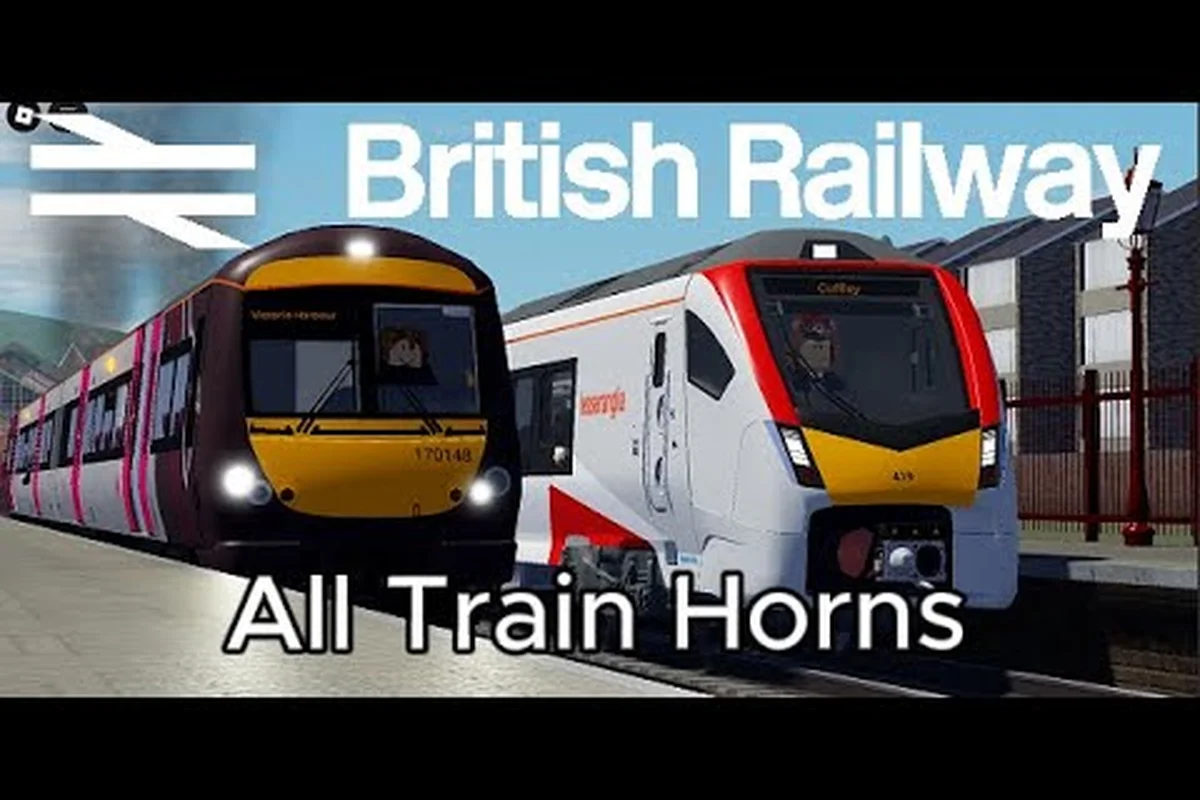
Every locomotive in British Railway carries its own signature voice, and knowing all train horns in British Railway can genuinely change how you play the game. The horn you choose isn't just cosmetic — it tells other drivers who you are, signals departures at busy platforms, and adds a layer of immersion that makes each class feel distinct. Whether you're hunting for the deepest diesel growl or the sharpest electric shriek, this guide breaks down every horn option with prices, sound profiles, and practical recommendations so you can spend your hard-earned credits wisely. feel distinct. Whether you're hunting for the deepest diesel growl or the sharpest electric shriek, this guide breaks down every horn option with prices, sound profiles, and practical recommendations so you can spend your hard-earned credits wisely, and if you're also weighing which locomotive to pair those horns with, our British Railway Roblox Trains rundown covers the best rolling stock to match your audio setup.
Understanding How Train Horns Work in British Railway
Each train class in British Railway has its own horn sound, and you activate it from the driver cab using the dedicated horn key. The sound design team at Fourth Rail recorded authentic British locomotive horns, which means the audio differs significantly between diesel, electric, and multiple-unit classes. This isn't a one-size-fits-all system — a Class 43 HST sounds completely different from a Class 377 Electrostar, and that variety is exactly what makes collecting trains so rewarding.
The horn mechanic ties directly into the game's core loop because it's one of the few audio cues that carries across the entire map. When you sound the horn at a station, nearby players hear it regardless of their camera position, which makes it a practical tool for coordinating departures with guards and other crew members. According to community reports, experienced drivers use specific horn patterns to communicate with station staff, especially during busy rush-hour services when voice chat gets chaotic.
Horn Activation and Controls
The default control mapping places the horn on the H key for PC players, though you can rebind it in the settings menu if you prefer a different layout. Mobile players tap a dedicated horn button that appears on the right side of the screen when seated in the driver position, while console players use the RB button on Xbox and R1 on PlayStation. The horn has a short cooldown of roughly one second between activations, which prevents spam while still allowing you to deliver those satisfying double-blast departures.
What makes the horn system particularly interesting is how it interacts with the train's power state. A locomotive that's powered off produces a weaker, lower-volume horn sound compared to one that's running at full operational status. This detail matters because new players often wonder why their horn sounds different from what they hear in YouTube videos — the answer is usually that the train needs to be powered up first. The game does a good job of teaching this through the tutorial, but it's easy to miss if you skip ahead.
Sound Quality and Audio Design
The audio engineering in British Railway deserves special attention because each horn was sampled from real British locomotives operating on the national network. The Class 43 HST uses a recording from an actual InterCity 125, complete with that distinctive two-tone air horn that's become iconic among rail enthusiasts. Diesel classes generally produce deeper, more resonant tones, while electric multiple units like the Class 377 have a sharper, more electronic sound that reflects their modern traction systems.
| Horn Characteristic | Diesel Locomotives | Electric Multiple Units | Heritage Steam |
|---|---|---|---|
| Tone Quality | Deep, resonant, air-powered | Sharp, electronic, piercing | Whistle-like, melodic |
| Volume Level | Loud, carries long distances | Moderate, more localized | Soft, nostalgic feel |
| Activation Feel | Powerful, weighty | Quick, responsive | Delicate, historical |
| Best For | Mainline express services | Commuter and suburban routes | Scenic heritage lines |
The volume differences are actually noticeable in gameplay because they affect how other players perceive your train's presence. A Class 66 freight locomotive with its thunderous horn announces itself well before it appears around a curve, which can be an advantage when approaching busy stations where visibility is limited. Players who prioritize audio presence tend to gravitate toward the diesel classes, while those who prefer a more understated approach often choose modern electric units.
Complete Train Horn Price List and Sound Comparison
Now let's get into the practical details — what each horn costs and how it actually sounds in-game. The pricing structure for trains in British Railway follows a tier system based on the real-world class and its operational capabilities. Entry-level locomotives are affordable for new players, while the premium express and freight classes require significant grinding or a willingness to save up over multiple sessions.
The cheapest train in British Railway is the Class 08 Shunter, which serves as the perfect introduction to the game's economy. This little diesel workhorse costs just 4,500 credits and produces a surprisingly characterful horn that sounds exactly like the real thing — a short, gruff blast that fits its shunting duties perfectly. For players asking about the best starter train, the Class 08 offers the lowest barrier to entry while still delivering an authentic horn experience that makes you feel like a proper railway worker.
| Train Class | Price (Credits) | Horn Type | Sound Character | Best Use Case |
|---|---|---|---|---|
| Class 08 Shunter | 4,500 | Single-tone diesel | Short, gruff, workmanlike | Shunting, yard operations |
| Class 150 Sprinter | 12,000 | Two-tone DMU | Bright, cheerful, compact | Branch line services |
| Class 377 Electrostar | 28,500 | Electric multiple unit | Sharp, modern, precise | Commuter routes |
| Class 43 HST | 45,000 | Two-tone air horn | Iconic, powerful, nostalgic | Intercity express |
| Class 66 Freight | 52,000 | Deep diesel horn | Thunderous, commanding | Heavy freight operations |
| Class 800 Azuma | 68,000 | Modern electric | Sleek, refined, quiet | High-speed intercity |
Budget-Friendly Horn Options for New Players
If you're just starting out and wondering how to buy a train in British Railway without breaking the bank, the Class 150 Sprinter represents the sweet spot between affordability and functionality. At 12,000 credits, it costs roughly three times the Class 08 but offers a proper passenger service experience with a much more satisfying horn. The two-tone DMU horn has that classic British rail sound that immediately transports you to a rural branch line somewhere in the countryside, and it's loud enough to be heard clearly at station platforms.
The Class 08 Shunter remains the absolute cheapest option, and it's genuinely worth owning even after you've progressed to bigger locomotives. Its horn might be simple, but there's something charming about that short, no-nonsense blast that perfectly captures the character of a yard shunter. Many veteran players keep one in their fleet specifically for shunting duties and yard operations, where its compact size and distinctive horn make it ideal for precise movements around sidings and depots.
Premium Horn Sounds Worth the Investment
For players who've saved up and want the best intercity train experience, the Class 43 HST delivers the most iconic horn in the entire game. That two-tone air horn is instantly recognizable to anyone familiar with British rail history, and hearing it echo across the map as you pull out of a major station is genuinely thrilling. At 45,000 credits, it's a significant investment, but the combination of speed, passenger capacity, and that legendary horn sound makes it a favorite among serious players.
The Class 66 Freight takes a different approach with its deep, thunderous horn that sounds like it means business. This locomotive is the workhorse of the freight network, and its horn reflects that role — it's loud, commanding, and impossible to ignore. Players who enjoy hauling heavy loads across long distances often cite the horn as one of the main reasons they chose the Class 66 over other options, because it makes every departure feel like an event.
How to Buy a Train and Test Horn Sounds
The process of purchasing a train in British Railway is straightforward, but there are a few steps that new players often miss. First, you need to open the train shop menu by pressing the B key on PC or navigating through the main menu on mobile and console. The shop displays all available locomotives with their prices, specifications, and a preview button that lets you hear the horn before committing to a purchase. This feature is invaluable because it lets you compare all train horns in British Railway side by side without spending any credits.
When you select a train in the shop, you'll see its full specifications including top speed, acceleration, passenger capacity, and of course, the horn sound. The preview plays a short sample that captures the horn's character, though some players note that the in-game sound can vary slightly depending on your audio settings and distance from the train. According to community testing, the preview is accurate enough to make an informed decision, but it's worth checking YouTube videos for real gameplay footage if you want to hear the horn in context.
Buying a Horn Pack: Step-by-Step
-
Open the train shop menu using the B key (PC) or the shop button in the main menu (mobile/console).
-
Browse the available locomotives and select one to view its full specifications, including the horn sound preview.
-
Click the preview horn button to hear the sound before purchasing — this costs nothing and helps you make an informed choice.
-
Check your credit balance to ensure you have enough — the game clearly displays your current balance in the corner of the shop screen.
-
Confirm the purchase by clicking the buy button, and the train will be added to your fleet immediately.
-
Spawn your new train at any available platform and take it for a test run to experience the horn in real driving conditions.
The train prices in British Railway are designed to give players a clear progression path, with each tier unlocking new capabilities and more distinctive horn sounds. The cheapest trains are accessible within the first hour of gameplay, while the premium options require several sessions of dedicated play or strategic saving. If you're wondering about the best starter train, most experienced players recommend starting with the Class 08 Shunter to learn the basics, then upgrading to the Class 150 Sprinter once you understand the game's systems.
Testing Horns Before You Commit
One of the smartest strategies for new players is to spend time at busy stations listening to other players' horns before making a purchase decision. The game's social nature means you'll constantly encounter different locomotives, and each one gives you a free demonstration of its horn sound. Strike up conversations with other drivers and ask about their trains — the British Railway community is generally friendly and happy to share opinions about which horns sound best.
You can also check the official British Railway Roblox page for community discussions and updates about the game's audio design. The developer, Fourth Rail, has been praised for their attention to authentic sound recording, and they regularly share behind-the-scenes content about how they capture real locomotive sounds for the game. This transparency has helped build trust with the community and explains why the horn sounds are so consistently praised.
Best Starter Trains and Their Horn Characteristics
Choosing the right first train is crucial because it shapes your early experience and determines how quickly you can progress to more advanced locomotives. The best starter train for most players is the Class 150 Sprinter, which offers a perfect balance of affordability, passenger capacity, and that satisfying two-tone DMU horn. It's fast enough for branch line services, reliable enough for consistent earnings, and its horn sound is distinctive enough to make you feel like a proper train driver from day one.
The Class 08 Shunter remains the cheapest option at just 4,500 credits, making it the obvious choice for players who want to start earning immediately without grinding for hours. Its horn might be simple, but it's authentic to the real locomotive and perfectly suited to its shunting role. If you're the type of player who enjoys the operational side of railways — coupling wagons, moving stock around yards, and performing precise movements — the Class 08 is an excellent foundation.
| Starter Train | Price | Horn Appeal | Earning Potential | Overall Rating |
|---|---|---|---|---|
| Class 08 Shunter | 4,500 | Simple, authentic | Low but steady | 7/10 |
| Class 150 Sprinter | 12,000 | Bright, cheerful | Good for beginners | 9/10 |
| Class 377 Electrostar | 28,500 | Modern, precise | Strong commuter income | 8/10 |
| Class 43 HST | 45,000 | Iconic, powerful | Excellent express earnings | 9/10 |
Comparing the Best Intercity Train Options
When you're ready to move up to intercity services, the Class 43 HST and Class 800 Azuma represent the two main contenders for the best intercity train title. The Class 43 offers that legendary two-tone air horn that rail enthusiasts adore, combined with proven performance on express routes. The Class 800, meanwhile, brings a more modern electric horn that's quieter and more refined, which some players prefer for its subtlety.
The choice between these two ultimately comes down to personal preference. If you want the iconic sound that defines British rail travel, the Class 43 HST is the clear winner. If you prefer a more contemporary experience with quieter operation, the Class 800 Azuma is worth the extra investment. Both trains are excellent for earning credits on intercity services, and you can't go wrong with either choice — it really comes down to whether you want that classic horn or the modern alternative.
Long-Term Fleet Building Strategy
Building a diverse fleet with different horn sounds is one of the most enjoyable aspects of British Railway's endgame. Veteran players typically maintain a collection that covers all the major horn types — a diesel for freight, an electric for commuter services, and a heritage option for scenic routes. This variety keeps the gameplay fresh because each train offers a different driving experience, and the horn sounds reinforce that sense of change when you switch between classes.
For players who want to maximize their earnings while building their collection, focusing on the Class 43 HST as your primary intercity train is a solid strategy. Its combination of speed, capacity, and that iconic horn makes it the most satisfying all-rounder in the game. Once you've secured one, you can branch out into specialized trains for different roles, each bringing its own unique horn sound to your growing fleet.
Horn Etiquette and Community Practices
The British Railway community has developed its own horn etiquette over time, and understanding these unwritten rules will help you fit in and avoid annoying other players. The most important practice is using a single horn blast when departing from a station, which signals to platform staff and nearby players that you're ready to leave. Double blasts are reserved for special occasions or when acknowledging another driver's greeting, while prolonged horn use is generally considered poor form unless you're in a situation where it's genuinely necessary.
According to community reports, the horn has become an essential communication tool in the game, especially for players who don't use voice chat. A quick blast when passing another train is the equivalent of a friendly wave, and many players use specific patterns to convey different messages. Learning these customs will make your time in British Railway more enjoyable and help you connect with the community on a deeper level.
Using Horns for Station Announcements
At busy stations, the horn serves a practical purpose beyond just signaling departures. Experienced drivers use it to alert waiting passengers that their train is arriving, which is especially helpful on platforms where visibility is limited. The sound carries well across the map, so a well-timed horn blast can save passengers from missing their connection and reduce the chaos that sometimes occurs during peak hours.
The key is finding the right balance — too many horn blasts become annoying, while too few mean passengers might not notice your arrival. Most players settle into a rhythm of one blast when approaching the platform and another when departing, which provides clear audio cues without becoming excessive. This practice has become so standard that new players often pick it up naturally after watching more experienced drivers for a few sessions.
Horn Patterns and What They Mean
| Horn Pattern | Meaning | Typical Use |
|---|---|---|
| Single short blast | Departure signal | Leaving a station |
| Double short blast | Acknowledgment | Responding to another driver |
| Long single blast | Arrival warning | Approaching a platform |
| Two long blasts | Emergency signal | Alerting to a problem |
| Quick triple blast | Celebration | Special occasions, achievements |
These patterns aren't enforced by the game mechanics, but they've developed organically through community use and are widely recognized among regular players. Learning them will help you communicate more effectively and avoid confusion in busy situations. The horn system in British Railway is one of the few places where the game's audio design directly enables social interaction, and the community has embraced it enthusiastically.
Frequently Asked Questions
What is the cheapest train in British Railway?
The Class 08 Shunter is the cheapest train in British Railway at 4,500 credits. It features a simple, authentic diesel horn that suits its shunting role perfectly. While it has limited passenger capacity, it's an excellent starting point for new players learning the game's systems and earning their first credits.
How do I hear all train horns in British Railway before buying?
The train shop includes a preview button that plays each locomotive's horn sound before you commit to a purchase. You can also visit busy stations and listen to other players' trains, or check YouTube videos for real gameplay footage. The preview system is accurate and lets you compare options side by side.
What is the best starter train for new players?
Most experienced players recommend the Class 150 Sprinter at 12,000 credits as the best starter train. It offers a great balance of price, passenger capacity, and a bright two-tone DMU horn. The Class 08 Shunter is a cheaper alternative if you want to start earning immediately with minimal investment.
Which train has the best horn sound?
The Class 43 HST is widely considered to have the best horn sound in British Railway. Its iconic two-tone air horn was sampled from a real InterCity 125 and captures that legendary British rail sound perfectly. At 45,000 credits, it's a significant investment but worth it for the audio experience alone.
How do I buy a train in British Railway?
Open the train shop menu using the B key on PC or the shop button in the main menu on mobile and console. Browse available locomotives, preview their horn sounds, and confirm your purchase if you have enough credits. The train is added to your fleet immediately and can be spawned at any available platform.