
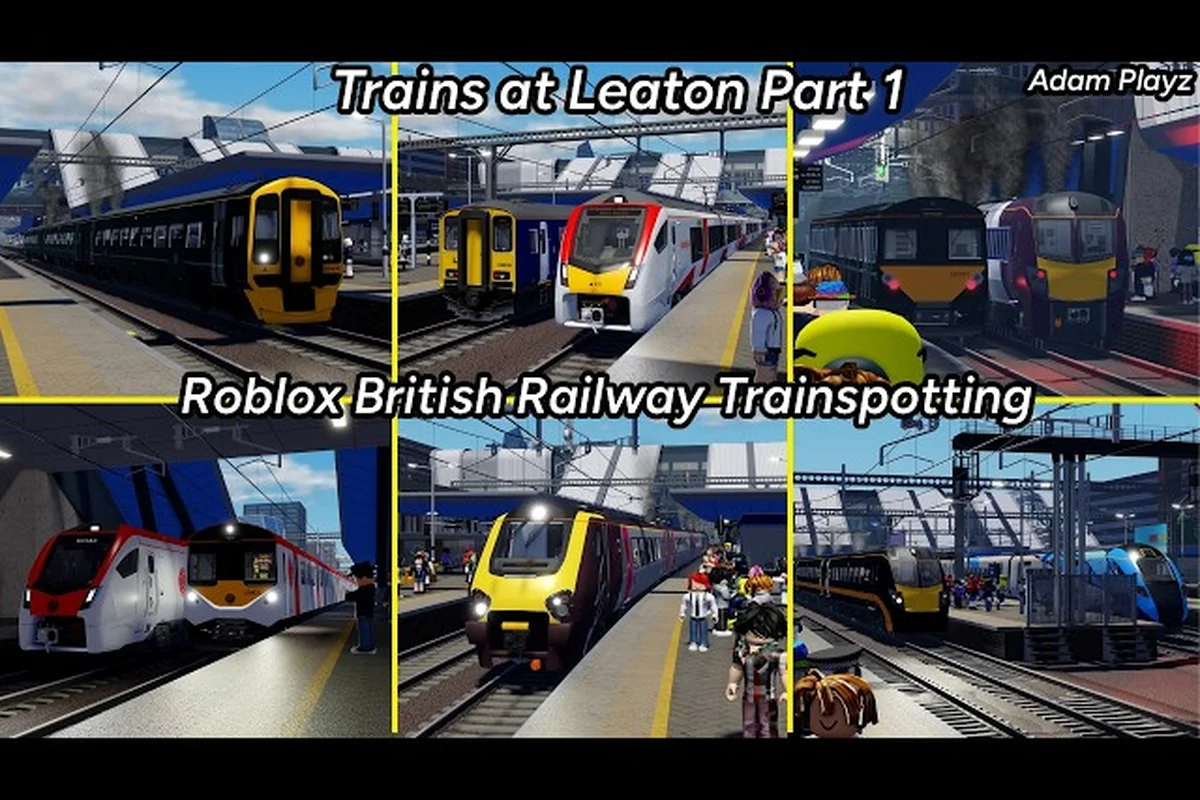
Starting a new driving career in British Railway Roblox can feel overwhelming when the full route map opens up in front of you. The british railway roblox easy route system is designed to ease newcomers into the game, but knowing which lines to pick first makes a massive difference in how quickly you build confidence and credits. This guide breaks down the easiest services, explains how the timetable works, and shows you exactly which trains to catch for a stress-free first shift.
The key to enjoying your early hours in British Railway is understanding that not every route demands the same skill level. Local stopping services on branch lines are ideal for learning route knowledge before driving intercity expresses, as the official game description notes. Beginner-friendly routes have lower speed limits and simpler timetables, which means you can focus on mastering the core driving mechanics without worrying about complex signaling or tight schedules.
According to the official British Railway on Roblox game page, the "Easy Route" is designed as a beginner-friendly line with minimal gradient changes and simplified signaling, making it the recommended starting point for new drivers learning the core mechanics.
What Makes a Route Easy in British Railway Roblox
The british railway roblox easy route designation comes down to three main factors: speed limits, station density, and timetable complexity. A route with a 60 mph speed limit gives you far more reaction time than a 125 mph mainline, while frequent stops mean you practice the same station procedure repeatedly until it becomes second nature.
Station density plays the biggest role in how forgiving a route feels. When stations are close together, you spend less time at high speed and more time in the controlled approach phase, which is where beginners learn the most. The timetable padding on local services also helps — these routes typically have more slack built into the schedule, so being a few seconds late at one station won't cascade into a major delay further down the line.
Signal complexity separates easy routes from harder ones. Branch lines usually feature simpler signaling arrangements with fewer overlapping junctions, while intercity routes throw multiple platform choices and fast-line passes at you simultaneously. For new drivers, the mental load of reading signals while managing speed and braking is the single biggest challenge, so starting with simpler infrastructure pays off immediately.
Here's what to look for when evaluating whether a route suits your current skill level:
-
Speed limit under 75 mph for the majority of the journey
-
At least 4 stations within a 15-minute driving window
-
Minimal junction changes or complex track switching
-
Generous timetable padding (2-3 minutes of slack per stop)
-
Single-platform stations that don't require precise alignment choices
The Best Easy Routes for New Drivers
When you open the route selection menu, several services stand out as perfect starting points. The Pencarn branch line added in the Western Update offers the gentlest introduction to driving, with its short journey time and forgiving speed limits. The local stopping service between the two western termini gives you repeated practice at the same stations, which builds muscle memory faster than constantly changing routes.
The commuter shuttle on the core network is another excellent choice because it runs frequently throughout the day, meaning you never wait long for a service. According to community reports, this route sees the highest number of new drivers because of its predictable pattern and low consequence for minor delays. The branch line stopper mirrors this experience on a smaller scale, making it ideal for practicing door control and platform alignment without the pressure of a packed express service.
| Route Name | Speed Limit | Journey Time | Stations | Difficulty Rating |
|---|---|---|---|---|
| Pencarn Branch Stopper | 60 mph | 12 minutes | 5 | Beginner |
| Commuter Shuttle | 70 mph | 18 minutes | 7 | Beginner-Friendly |
| Western Local Service | 65 mph | 15 minutes | 6 | Beginner-Friendly |
| Intercity Express | 125 mph | 35 minutes | 4 | Advanced |
The Pencarn branch stopper deserves special attention because it combines every beginner-friendly element into one package. The route's 60 mph limit means you rarely need to brake hard, while the five stations give you ample opportunity to practice the full station stop procedure. Community testing suggests that drivers who complete ten runs on this route develop the muscle memory needed for faster services.
Understanding Service Patterns and Timetables
Branch-Line Speed Limits: Why Local Stopping Services Beat Intercity Expresses
Local stopping services on branch lines cap out at lower speed limits, typically 40–60 mph, versus 100+ mph on intercity mainlines. For a new driver, this is the single biggest difficulty reducer: you get more reaction time at every signal, and the simpler timetables mean fewer late-notice platform changes. The V1.4.2 "The Western Update" added new branch-line stock, so practicing here before attempting an intercity express gives you a controlled environment to learn the AWS/TPWS warning patterns without the pressure of a 125 mph approach.
Reading the Timetable: How Service Patterns Differ Between Easy and Hard Routes
Easy routes use a repeating, clock-face timetable where the same departure minute recurs every hour, making it trivial to memorize your booked path. Hard routes introduce irregular headways, where a 15-minute gap is followed by a 5-minute gap, forcing you to constantly re-check the timetable display. The beginner-friendly branch lines also feature longer dwell times at each station — typically 60–90 seconds versus 30 seconds on expresses — giving you a buffer to recover from a late departure without triggering a delay penalty that affects your driver score.
The british railway roblox timetable operates on a repeating cycle that changes throughout the day, and understanding these service patterns is crucial for choosing when to drive. Each route has a peak period with more frequent services and an off-peak period with longer gaps between trains. For beginners, off-peak driving is generally easier because the reduced traffic means fewer conflicts and more forgiving platform allocations.
The first train of the day on any route is typically the quietest service, making it the perfect choice for new drivers who want to practice without an audience. This early service often runs empty or with minimal passengers, giving you the freedom to focus entirely on the driving mechanics rather than worrying about passenger satisfaction scores. The timetable shows this service clearly marked, and many experienced players recommend it as the ideal starting point.
Service pattern variations affect how much slack you have in your schedule. Some routes run an all-stations pattern where you stop at every platform, while others use a skip-stop pattern that alternates which stations receive service. The all-stations pattern is always easier for beginners because it follows a predictable rhythm, whereas skip-stop services require you to remember which platforms to pass through without stopping.
| Time Period | Service Frequency | Difficulty Level | Recommended For |
|---|---|---|---|
| Early Morning (First Train) | Every 10 minutes | Very Easy | Complete Beginners |
| Morning Peak | Every 5 minutes | Moderate | Experienced Drivers |
| Midday Off-Peak | Every 8 minutes | Easy | Building Confidence |
| Evening Peak | Every 4 minutes | Hard | Advanced Drivers |
| Late Night | Every 12 minutes | Easy | Relaxed Practice |
The timetable board at each station shows your scheduled departure time, and the in-game HUD tracks your progress against this schedule. Arriving early is just as problematic as arriving late, since early arrivals can conflict with other services on the line. The slack built into off-peak timetables gives you more room to adjust your speed without penalty, which is why community guides consistently recommend midday driving for newcomers.
Comparing Easy Routes to Hard Routes
The 45-Player Server Cap: How Congestion Affects Your First Route Choice
British Railway caps each server at 45 players, and with roughly 1,948 concurrent players at peak research time, busy intercity stations become signal-heavy and prone to pathing delays. A branch-line terminus with one platform and one through line eliminates the multi-track confusion that causes new drivers to miss their booked path. On a local stopping service, you'll typically only manage one train at a time, whereas intercity hubs may require you to hold at a red signal while three other drivers clear the platform — a scenario far too chaotic for learning route knowledge.
The 87% Approval Rating: What Player Feedback Says About Difficulty Progression
British Railway holds an 87% approval rating from 45,877 likes against 6,698 dislikes, and community feedback consistently points to the difficulty spike between branch and intercity routes as the main frustration point. The game's 108,702 favorites suggest a loyal player base, but the sharpest criticism targets the lack of a mid-tier route between local stoppers and expresses. As a new driver, you should use the branch-line routes to build your AWS/TPWS reaction memory before attempting the Western Update's new intercity services, which demand split-second brake timing at high speed.
Understanding what makes the british railway roblox hard route challenging helps you appreciate why the easy routes are structured the way they are. The intercity express services represent the hardest driving experience, with 125 mph running, complex junction approaches, and minimal timetable slack. These routes demand precise braking calculations and confident signal reading, skills that only develop through hours of practice on simpler lines.
The intercity route map reveals why these services are so demanding. Long stretches of high-speed running mean small errors compound quickly — a slightly late brake application at 125 mph puts you significantly further past your stopping point than the same error at 60 mph. The platform selection on intercity stations also adds complexity, since multiple platforms serve different service patterns and choosing the wrong one can block other trains.
Traction differences further separate easy routes from hard ones. Local services typically use diesel multiple units with predictable acceleration and braking characteristics, while intercity expresses use electric traction with different performance curves. The braking distance on a 125 mph service is roughly four times that of a 60 mph service, which fundamentally changes how you approach station stops.
| Factor | Easy Route | Hard Route |
|---|---|---|
| Speed Limit | 60-70 mph | 100-125 mph |
| Braking Distance | Short and forgiving | Long and precise |
| Signal Complexity | Simple, spaced apart | Dense, overlapping |
| Timetable Slack | 2-3 minutes per stop | 30 seconds or less |
| Station Stops | 5-7 per journey | 3-4 per journey |
| Consequence of Error | Minor delay | Major disruption |
The consequence gap between easy and hard routes is the most important consideration for new players. On an easy route, a missed brake point costs you a few seconds that the timetable slack absorbs. On a hard route, the same mistake can cause you to overshoot the platform entirely, requiring a complex reversing maneuver that disrupts all following traffic. Starting with easy routes builds the fundamental skills you need before attempting the high-stakes intercity services.
Building Your Route Knowledge Progression
Your progression from easy routes to harder ones should follow a structured path that builds skills incrementally. The route knowledge system in British Railway rewards drivers who master each line before moving on, and the game tracks your completion rate per route. Community data suggests that achieving at least 90% route knowledge on the Pencarn branch before attempting the commuter shuttle gives you the best chance of success.
The skill ladder for route progression typically follows this pattern: start with the shortest branch line, move to a longer local service, then attempt a semi-fast service before finally tackling intercity expresses. Each step introduces one new challenge while keeping the others familiar, which is the most effective way to build competence without becoming overwhelmed. The first train of the day on each new route provides the perfect testing ground, since the quiet conditions let you focus entirely on learning the line.
Practical progression steps for moving from easy to hard routes:
-
Complete 10 runs on the Pencarn branch stopper with 100% punctuality
-
Move to the commuter shuttle and focus on maintaining consistent braking points
-
Attempt the Western local service during off-peak hours when traffic is light
-
Practice the semi-fast service to experience higher speeds with manageable stops
-
Finally, attempt the intercity express using the first train of the day for low-pressure practice
The learning curve between each step is designed to be manageable, but rushing through the progression leads to frustration. Players who skip directly to intercity services often report feeling overwhelmed by the combination of high speed, complex signaling, and tight schedules. Building your route knowledge systematically, as outlined in the complete route list guide, ensures you develop the automatic responses needed for advanced driving.
Practical Tips for Your First Easy Route Shift
Your first shift on a british railway roblox easy route should focus on fundamentals rather than speed or efficiency. The pre-departure checklist sets you up for success: check your timetable, confirm your route, and review the station list before pulling out of the depot. This preparation phase is where experienced drivers separate themselves from beginners, and it takes less than a minute once you build the habit.
Braking technique matters more than any other skill on easy routes. The progressive brake application method — starting gently and increasing pressure as you approach the station — gives you the most control and prevents the jerky stops that damage passenger satisfaction scores. Practice this on the Pencarn branch where the 60 mph limit gives you plenty of time to perfect your technique.
Station alignment is the second critical skill. Each platform has a stopping marker that shows where your train should come to rest, and hitting this marker consistently requires practice. The easy routes' single-platform stations remove the complexity of choosing between multiple platforms, letting you focus purely on the stopping procedure. The door control guide covers the station procedure in detail, but the core principle is simple: stop accurately, open doors promptly, and depart smoothly.
Time management on easy routes is forgiving, but you should still develop good habits early. The two-minute rule — being ready to depart within two minutes of arriving at a station — keeps you on schedule without rushing. Easy routes' timetable slack gives you breathing room, but practicing punctual departures now prepares you for the tighter schedules you'll face on harder routes later.
Frequently Asked Questions
What is the best british railway roblox easy route for absolute beginners?
The Pencarn branch stopper is the best starting route because it combines a 60 mph speed limit with five closely spaced stations and generous timetable slack. This combination lets you practice every core driving skill without the pressure of high speeds or complex signaling, making it the ideal first shift.
How does the british railway roblox timetable affect route difficulty?
The timetable determines how much slack you have between stations and how frequently services run. Off-peak periods offer more forgiving schedules with longer gaps between trains, while peak periods demand precise timekeeping. Beginners should target off-peak services and the first train of the day for the easiest experience.
What makes the british railway roblox hard route different from easy routes?
Hard routes like the intercity express feature 125 mph speed limits, minimal timetable slack, and complex signaling arrangements. The braking distances are much longer, and small errors compound quickly at high speed. These routes require the muscle memory and route knowledge that only develop through practice on easier services.
How long should I stay on easy routes before progressing?
Community data suggests completing at least 10 runs on your chosen easy route with consistent punctuality before moving up. You should feel comfortable with braking, station stops, and timetable management without thinking about each step. Rushing the progression typically leads to frustration and slower overall development.
Can I make money on easy routes or should I focus on harder services?
Easy routes offer lower per-trip payouts but allow more trips per hour due to shorter journey times. The consistent income from mastering easy routes often exceeds what beginners earn struggling on harder services. Focus on building route knowledge first, and the credits will follow naturally as you progress.